
For Tech Week Singapore 2026, we flew to Singapore to help build something we had never put on a show floor before. The Mac Hive combined six Mac mini and eight Mac Studio systems into a working local AI cluster, with Msty Nexus coordinating inference across all 14 machines.
We shared the booth with webAI, Jamf, and Ingram Micro under the theme “On-Device AI. Powered by Apple.” Visitors at the Marina Bay Sands Expo and Convention Centre could watch requests travel through the cluster and see live health information from the system as it ran.
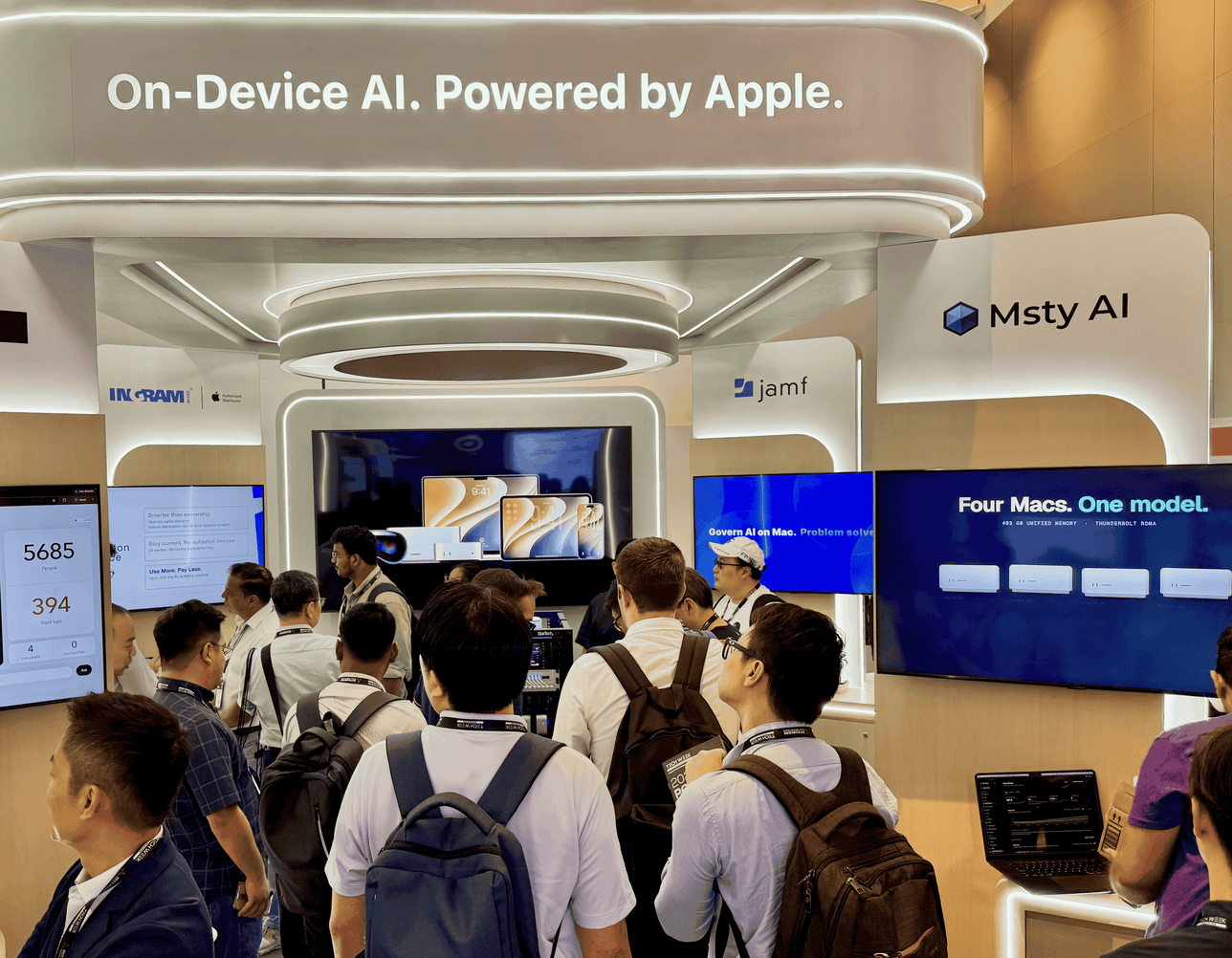
The Hive Brought People In
The Mac Hive was hard to miss. Fourteen Apple devices filled a full equipment rack, surrounded by screens and blue light. People stopped in the aisle, looked more closely, and asked what all of the hardware was doing together.
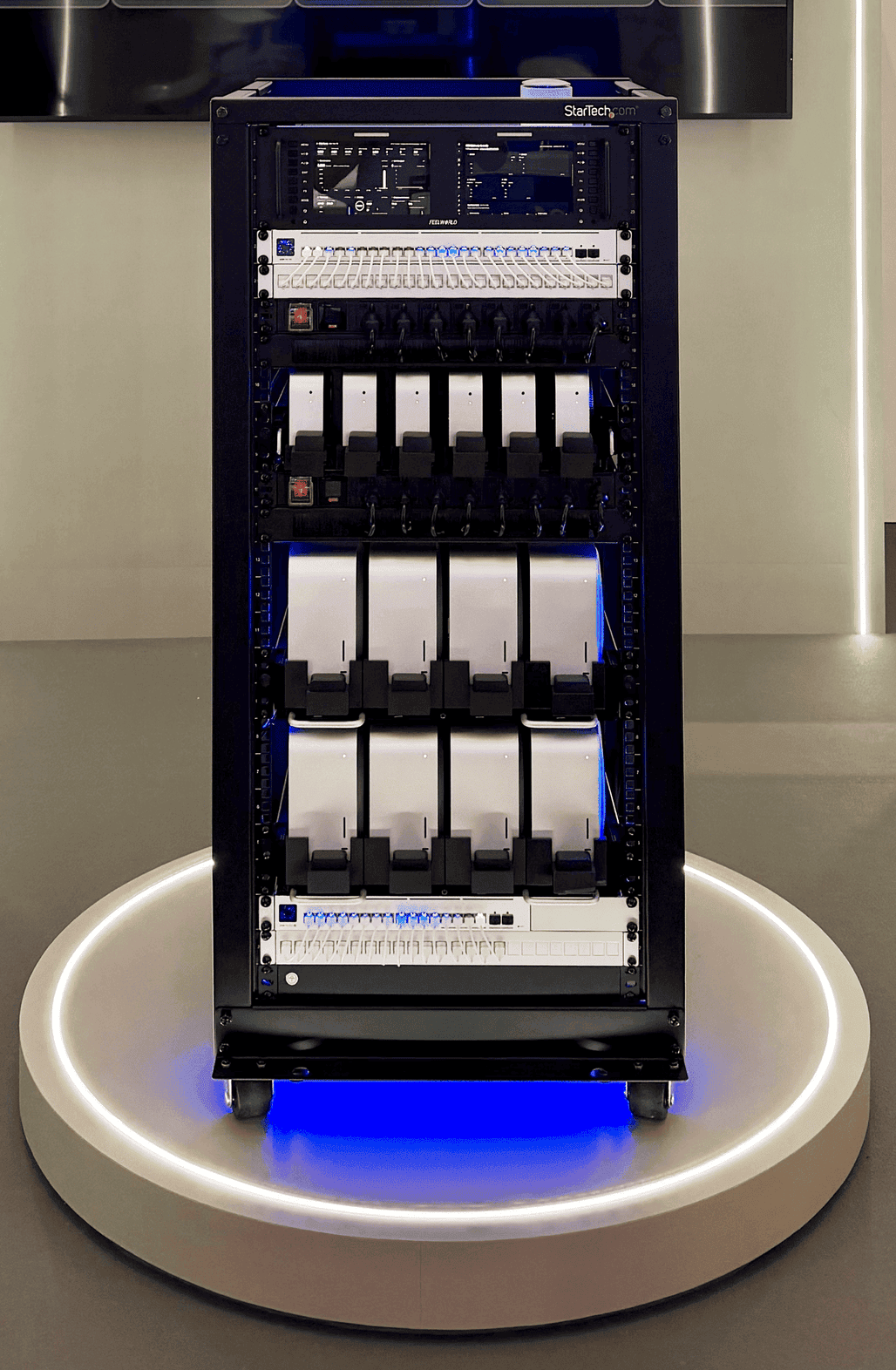
The question led directly into the local AI story. Apple silicon combines CPU, GPU, and Neural Engine capabilities with a unified memory architecture, giving each Mac the capacity to run capable models on the device. The Hive pooled those individual machines so they could take on work together.
Msty Nexus coordinated inference across the Hive and handled clustering and load balancing. Requests could move among the available machines instead of depending on a single device, while the entire setup remained visible and manageable from one software layer.
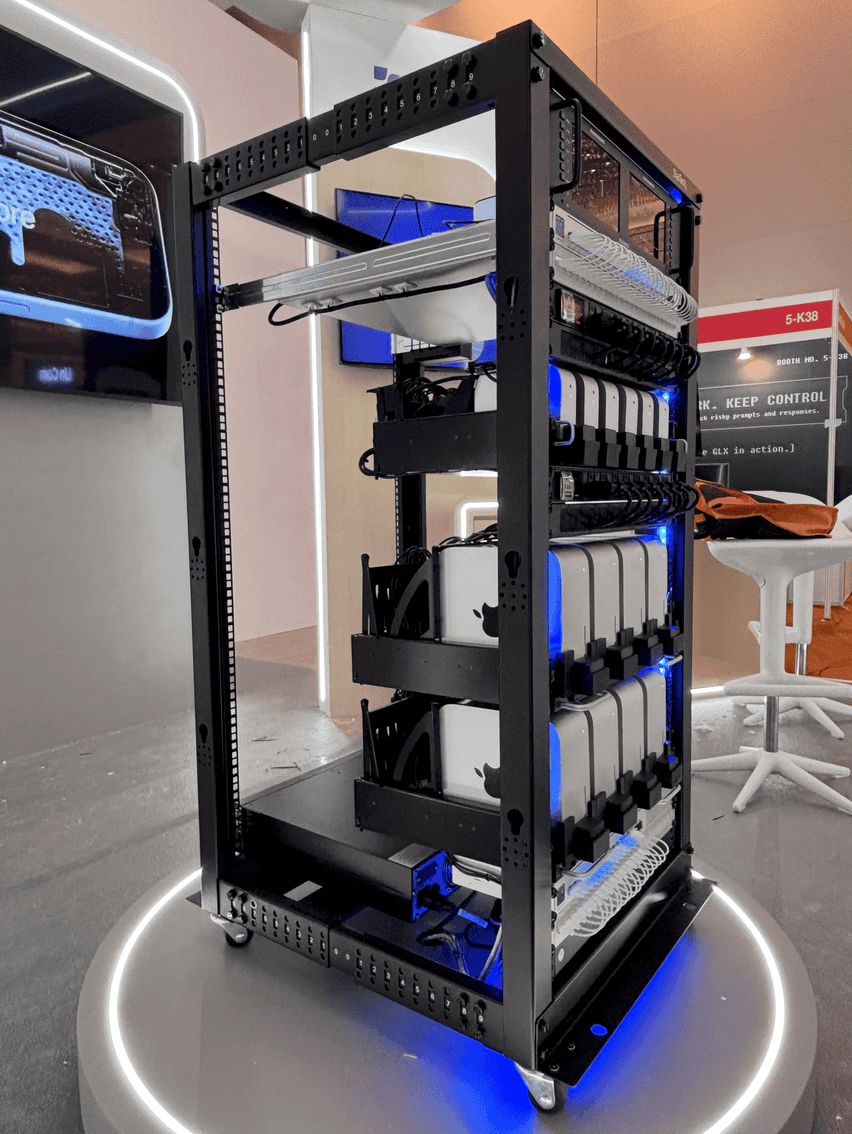
Watching Nexus Work in Real Time
Two displays built into the Hive showed different parts of the system. One followed active AI requests as they passed through Nexus and moved across the cluster. The other showed health information for the primary gateway device.
Instead of asking visitors to imagine how the cluster was behaving, we could point to the screens. They could see which machines were available, where requests were going, and whether the system was healthy.
Around the booth, we also ran Msty Nexus on laptops. Visitors could see that the orchestration behind the large rack was available through the same kind of device they already use for work, with both local and hosted AI resources accessible through Nexus.
From Curiosity to a Conversation About Control
After watching requests move through the Hive, visitors usually wanted to know how Nexus decided where the work should go. From there, we could explain the controls behind the demonstration.
One of those features is Smart Routes, which can direct each request to the right model for the work being done. As companies look for ways to reduce online token costs, Smart Routes give them a practical way to match model cost and capability to each request. Routine prompts can run on capable local or lower-cost models, while more demanding work can still reach premium online models. Users do not have to choose a model every time, and teams do not have to send every request to the same place. Nexus applies the routing logic, balances workloads, and uses fallbacks when needed.
We also talked about data-protection guardrails. Running inference on devices an organization controls can reduce unnecessary data movement, while putting Nexus at the gateway creates a central place to manage how requests are handled. Teams retain control over their models and infrastructure without losing sight of sensitive information moving through the system.
From Hardware to a Working System
Apple silicon and unified memory provided the foundation for the local workloads. The Mac Hive gathered the machines into shared infrastructure, and Msty Nexus handled inference, clustering, load balancing, routing, and system visibility.
People could see the hardware, send work through it, and follow the result on screen, which made the conversation far more concrete than a diagram or slide deck could have.
A Short Introduction to Msty Nexus
We also created a short promotional film for Tech Week Singapore. Although it first played at the event, it was made to introduce Msty Nexus more broadly and capture the idea behind the product.
We are glad to share it outside the booth for anyone who wants a quick introduction to Nexus.
A Global Community Around Local AI
We were especially glad to meet Msty customers from the other side of the world. Most of our contact happens through calls, repositories, and online communities, so sitting down with people in person was a welcome change. We heard how they are approaching local AI, answered questions about Nexus, and learned more about the problems their teams are trying to solve.
Across those conversations, the same priorities kept coming up. Organizations want access to powerful AI without giving up control of their data, models, or infrastructure.
Taking the Singapore Experience Forward
Tech Week Singapore 2026 gave us the opportunity to run Msty Nexus in a demanding public setup and talk directly with people considering local AI for their own organizations. The Mac Hive turned 14 Macs into shared infrastructure, while the live displays let visitors follow what Nexus was doing as requests moved through the system.
We are grateful to everyone who helped bring the booth together and every visitor who stopped to see what local AI can become.
We came to Singapore to demonstrate the technology, but the conversations around the booth and the customers we met are what we will remember most.